

21 May Why does my Autistic child scream randomly?
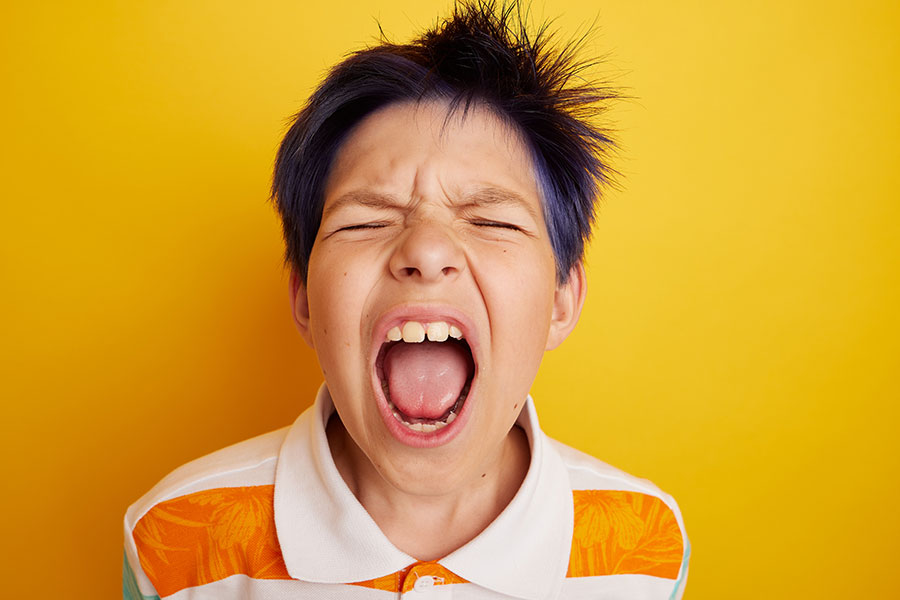
This is something many parents who have children with Autism often ask other professionals and me; it is something many parents have difficulties understanding and navigating appropriately. Before understanding why it happens, we need to remember that screaming in Autism does not always mean DISTRESS.
Often, we as parents and professionals assume that screaming means something is wrong, which is not always the case. At times, it can be a spontaneous vocalization, or in response to a trigger in their environment, it could be to communicate, or because we enjoy the sound or the feeling of vibrations in our throat. It could also be due to having big feelings we cannot manage or navigate effectively on our own, or because we are just bored.
Let us break down a few of these reasons.
Emotions
Some autistic children may have difficulty experiencing BIG feelings, and at times, these big feelings can be hard to regulate on their own. We may also struggle to express and communicate these feelings. Some emotions, such as anger, excitement, anxiety, or sadness, can be intense experiences, and sometimes, screaming can serve as a release. Furthermore, changes in routines or unexpected disruptions in the day can provoke anxiety for children with Autism, which may result in screaming or vocal outbursts as an attempt to self-soothe or regulate.
Sensory, Self-regulation, and Stimming
A natural part of Autism is sensory. Some autistic children find it hard to process the various sensory inputs they receive from their environment throughout the day. Some actively seek input, but others will attempt to avoid it as much as possible or at all costs. This can result in their environment becoming overwhelming and can lead to screaming as a form of self-regulation. Certain strong or unpleasant smells, bright lights, loud noises, or unusual/unnatural sounds can lead children to use screaming as a regulatory tool. On the other hand, some children may use screaming to gain additional input from their environment that may be lacking. Understanding your child’s sensory profile makes it easier to determine whether the behavior is due to regulation or stimulation.
Communication
Another direct aspect of Autism is difficulty with communication or “communication deficits”. Many children with Autism find it difficult to communicate their needs, wants, desires, and questions verbally. Some have limited speech, and some are non-verbal, which may result in distress or frustration. As a result, they may use screaming to communicate with the world around them. But why? Well, think about it, a scream is startling and abrupt, and people notice. It is an effective way to gain someone’s attention when we may not have the words to do so. The more it is acknowledged, the more screaming becomes the primary form of communication, used to indicate frustration, hunger, tiredness, and everything in between, as the response from others is often immediate.
Here are some strategies
Please ensure alternative forms of communication are always available.
By using communication devices, Picture Exchange communication, or sign language, we can help reduce anxiety and provide an opportunity for the child to express themselves without screaming when verbal communication is limited or the child is non-verbal. We want to always keep it visual over verbal.
Ensure a sensory-safe or friendly environment.
Reducing loud noises, bright lights, or other overwhelming sensory inputs could prevent screaming episodes associated with sensory or sensory regulation difficulties.
Keep consistent with routine and schedules.
Maintaining a consistent schedule and routine and providing predictable expectations and scenarios can help reduce anxiety or frustration, which may minimize screaming behaviors.
Emotional support
By teaching and learning coping strategies such as calming or breathing techniques, we can provide safe spaces for children when they experience big feelings or emotions. When the child feels supported and heard, there is often a decrease in screaming behaviors.
When we, as caregivers, teachers, and parents, begin to understand that screaming is more often than not a response to communication, sensory, or emotional challenges, rather than seeing it as intentional misbehavior, we can respond with empathy and understanding and create targeted intervention strategies.
