
The Amazing K Method

Age Does Not Equal Readiness

The Third Principle of the Amazing K Method

One of the most important lessons we have learned over more than 13 years of autism early intervention is that age and readiness are not always the same thing.


Birthdays tell us a child’s age. Development tells us what they are ready for.


At Amazing K, we believe meaningful decisions should be guided by developmental readiness rather than chronological age alone.

Principle 03

Age tells us how long a child has been in the world. Development helps us understand what they are ready to achieve within it.

For many autistic children, development does not happen evenly across all areas.


A child may show remarkable strengths in one area while still needing support in another.

Developmental Readiness

Readiness is not measured by birthdays alone.

When we look at the whole child, we can better understand how they learn, participate and function in everyday life.

Development

Many autistic children develop unevenly across communication, movement, learning, independence and regulation.

Participation

Readiness is often about whether a child can join, follow, communicate, wait, transition and engage.

Support

When support is based on readiness, children are given opportunities that match their developmental needs.

Development Is Rarely Equal Across All Areas

Many autistic children develop unevenly.


A child may be advanced in one area and still be developing foundational skills in another.


This can be confusing for families because strengths are often highly visible, while developmental gaps may be less obvious.


When we focus only on what a child knows, we can sometimes overlook how a child learns, participates and functions in everyday life.

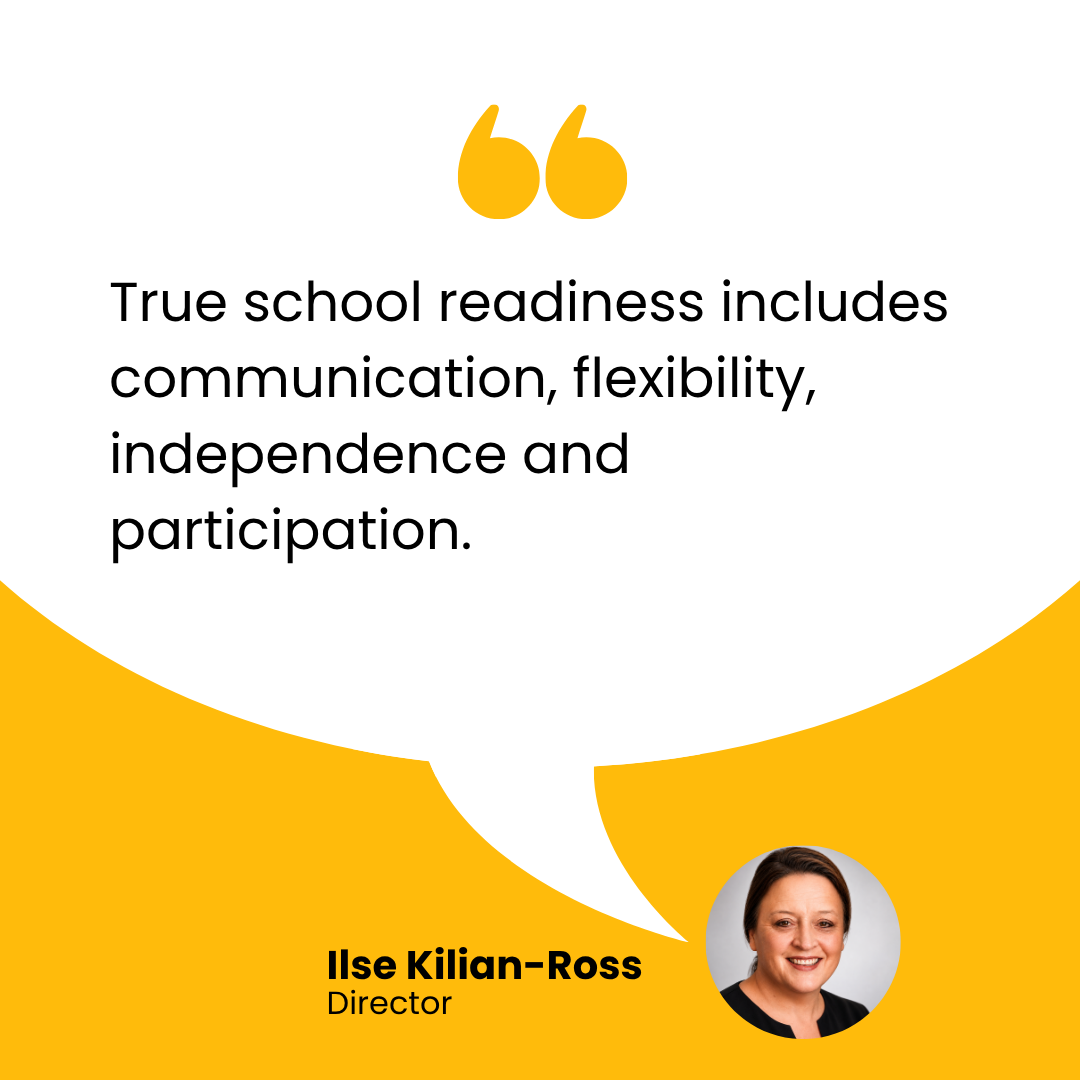
True school readiness includes communication, flexibility, independence and participation.

Academic Skills Do Not Tell The Whole Story

Many parents are understandably encouraged when their child recognises letters, counts, reads words or remembers large amounts of information. These are wonderful achievements, but academic skills alone do not always show whether a child is ready for the next stage of learning.

Communication

Can the child express needs, understand language and ask for help?

Attention

Can the child focus, shift attention and engage with learning opportunities?

Regulation

Can the child cope with emotions, change, transitions and expectations?

Independence

Can the child manage age-appropriate daily routines with support?

Participation

Can the child join group activities, follow routines and learn from others?

Motor Planning

Can the body support sitting, writing, dressing, feeding and play?

Understanding Hyperlexia

Many autistic children demonstrate an early interest in letters, numbers, words or patterns.


Some children learn to read long before expected. Others develop impressive memory skills and can recall information far beyond what would typically be expected for their age.


These strengths are often described as hyperlexia.


Hyperlexia can be a valuable strength and may become an important pathway for learning. However, reading words and understanding language are not always the same thing.


This does not diminish the child’s achievement. It reminds us that development occurs across many different areas.

Participation

Readiness is about participation.

Can a child participate in the opportunities available to them?

Join

Joining a group activity, following a classroom routine and waiting for a turn.

Learn

Learning from a teacher, learning from peers and completing everyday tasks.

Manage

Asking for help, managing transitions and coping with change.

Independence Matters

One of the greatest predictors of future success is not always academic performance.


It is independence.


Independence allows children to participate more fully in family life, school life and community life.


These skills develop gradually over time and require the same level of attention and support as academic learning.

Independence may include:

  • Feeding skills.
  • Toileting skills.
  • Dressing skills.
  • Following routines.
  • Managing personal belongings.
  • Making choices.
  • Communicating needs.

Readiness Includes The Body Too

Developmental readiness is not only about communication and learning. It is also about movement.


Children use their bodies to participate in almost everything they do.


Balance, coordination, body awareness, postural control and motor planning all influence how successfully a child can engage with learning opportunities.


A child who struggles to control their body may find it difficult to sit, attend, write, participate in games or complete self-help activities.


Learning does not happen separately from the body. The two are deeply connected.

Movement supports:

  • Sitting.
  • Attention.
  • Writing.
  • Play.
  • Self-help skills.
  • Group participation.

The Importance Of Group Learning

The world is filled with groups. Families are groups. Schools are groups. Communities are groups. Workplaces are groups.


For many children, readiness includes developing the ability to participate alongside other people.

Share Attention

Noticing people, activities and shared moments.

Wait

Developing patience and turn-taking skills.

Listen

Responding to instructions and group routines.

Participate

Joining others in structured and everyday activities.

Learn

Learning from teachers, peers and the environment.

What Families Are Often Not Told

Families are often given information about what children should know at a particular age. Far less attention is sometimes given to the developmental foundations that support learning.


Many parents are surprised to discover that school readiness involves far more than recognising letters, numbers, colours or shapes.

  • Communication.
  • Participation.
  • Attention.
  • Independence.
  • Emotional regulation.
  • Motor development.
  • Group learning skills.
  • Everyday functional readiness.

These foundations help children access learning opportunities long after the alphabet has been mastered.

Age Does Not Equal Readiness

At Amazing K, we do not measure readiness by birthdays alone.

We look at the whole child. We consider communication, participation, independence, attention, movement, emotional regulation and learning.


Every child develops at their own pace. Every child follows their own developmental pathway.

Start Your Amazing K Journey

Readiness is not about rushing children forward. It is about understanding what they need in order to participate, learn and thrive.

At Amazing K, we look beyond age alone.


We look at the whole child.

Contact Amazing K