
29 Jun Why Does My Autistic Child Climb On Everything
Autism Behaviour
Why Does My Autistic Child Climb On Everything?
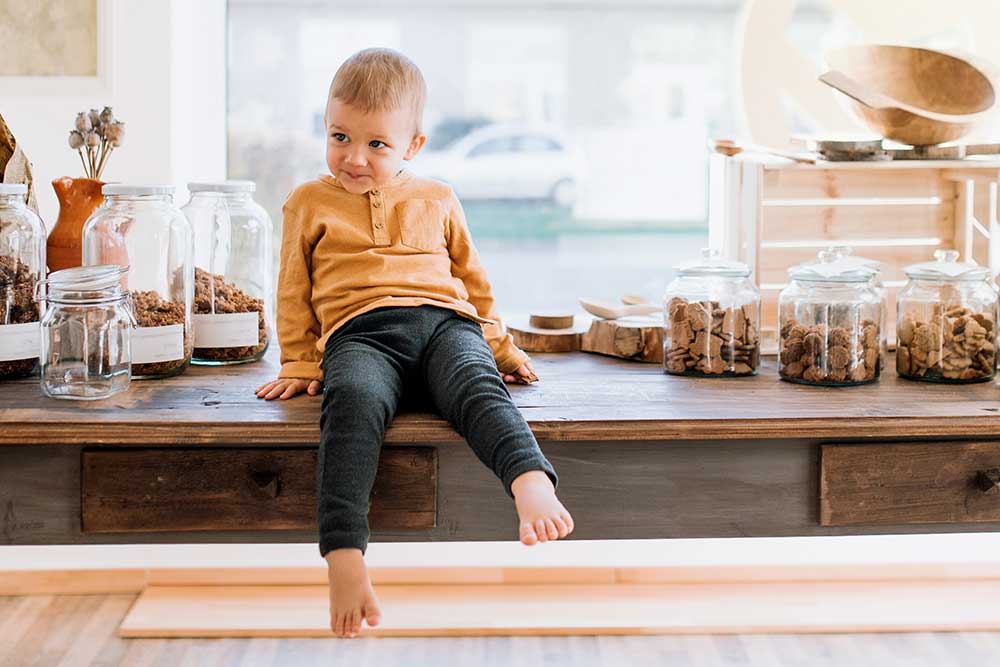
Many parents find themselves asking: “Why does my autistic child climb on everything?”
Whether it is furniture, kitchen counters, windowsills, gates, tables or bookshelves, some children seem determined to climb wherever they can.
One of the most common explanations is that the child is seeking sensory input. Occupational therapists often discuss the vestibular and proprioceptive systems and how activities such as climbing, swinging, sliding, balancing and jumping help children learn about movement and their bodies.
There is certainly value in this explanation, and for some children, sensory needs may play an important role.
However, the answer is often more complex than simply labelling a child as sensory-seeking.
Are They Getting Enough Safe Opportunities To Climb?
The first question to ask is whether the child is actually being given enough opportunities to climb appropriately.
When we look at typically developing children, we actively encourage climbing and exploration. We take children to playgrounds. We buy bicycles. We visit parks. We encourage them to use jungle gyms, swings, climbing frames and obstacle courses.
Physical exploration is considered a normal and healthy part of childhood.
Yet many autistic children live very different lives. Parents are often worried about safety. Public spaces can be overwhelming. Playgrounds can be difficult to navigate. Families may avoid certain environments because their child struggles with crowds, noise, transitions or unpredictable situations.
As a result, some autistic children have fewer opportunities to engage in the very activities that naturally developing children are encouraged to do every day.
When The Home Becomes The Playground
If a child has a strong desire to climb but has limited access to appropriate climbing opportunities, they may find alternatives.
- The couch becomes a jungle gym.
- The dining room chairs become an obstacle course.
- The television cabinet becomes a climbing frame.
Sometimes the behaviour may be driven by a need for movement. Sometimes it may simply be a child exploring their environment.
Movement Matters
The goal is not to stop children from climbing.
The goal is to provide safe, appropriate opportunities for movement while helping children develop communication, attention, learning and participation skills alongside it.
Climbing Can Also Become Repetitive Behaviour
Climbing can become repetitive behaviour in the same way that other autistic behaviours become repetitive.
Autistic children often return to activities they enjoy. If a child enjoys spinning, they may spin repeatedly. If a child enjoys lining up toys, they may do it over and over again. If a child enjoys climbing, they may seek out opportunities to climb whenever they can.
That does not automatically mean that every climbing behaviour is a sensory regulation strategy.
- Sometimes children climb because they enjoy climbing.
- Sometimes they climb because they are bored.
- Sometimes they climb to avoid a task.
- Sometimes they climb because it gets a reaction from the adults around them.
Children quickly learn which behaviours attract attention. Even negative attention is still attention. A child who discovers that climbing onto the television cabinet immediately brings an adult running may repeat the behaviour.
Questions Parents Can Ask
It is important not to assume that every climbing behaviour has the same cause. Instead, it can be helpful to ask a few questions:
- When is my child climbing?
- What happens immediately before the climbing starts?
- What happens afterwards?
- Does it occur during specific activities?
- Does it happen when my child is bored?
- Does it happen when demands are placed on them?
- Does it happen when they want attention?
- Does it happen throughout the day regardless of circumstances?
The answers often provide valuable clues.
“Movement is not separate from learning. It is part of learning.”
Ilse Kilian-Ross, Founder, Amazing K
How Amazing K Looks At Movement
At Amazing K, we recognise that children need movement. We do not expect young autistic children to spend their days sitting still.
Our learners have opportunities to climb, run, balance, jump, explore and move throughout the day. We understand that movement is a normal part of childhood and an important part of development.
Every child is different. While sensory needs may be one reason for climbing, they are rarely the only explanation.
Looking at the whole child often gives us a much clearer understanding of what is really happening.
Autism School In Johannesburg
Looking for an autism school in Johannesburg that understands your child’s movement, behaviour and development?
Amazing K is a specialist autism school in Johannesburg supporting autistic children and children with developmental delays through structured, supportive and movement-aware learning environments.
Our team looks at the whole child — how they communicate, move, regulate, participate, learn and build independence throughout the day.
If your child needs support with communication, behaviour, movement, social participation, independence or school readiness, Amazing K may be able to help.
