
03 Jul Why Does My Autistic Child Love Spinning
Autism Behaviour
Why Does My Autistic Child Love Spinning?
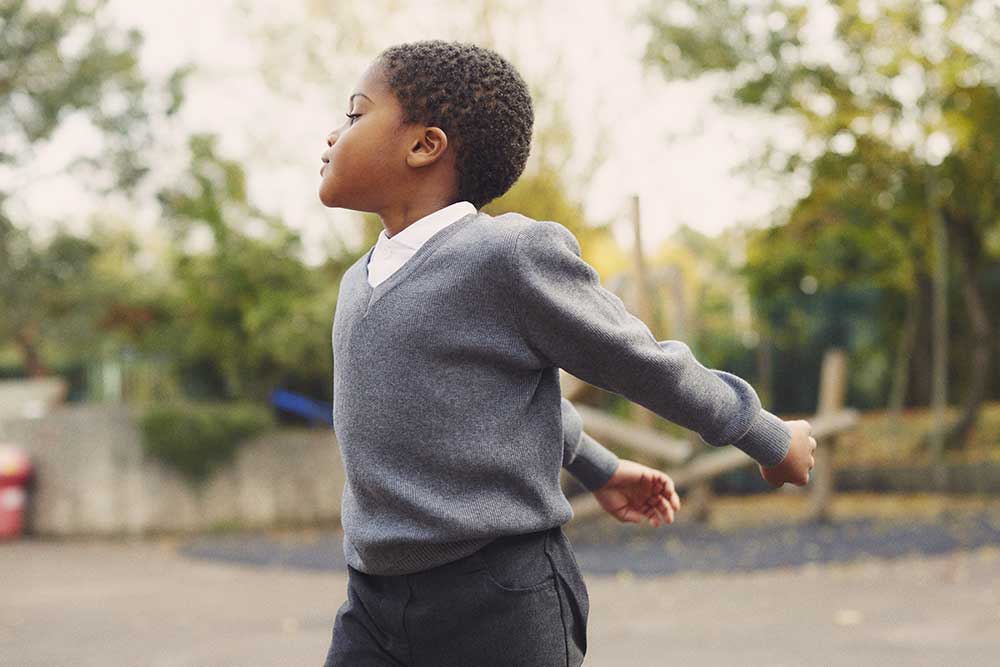
If you have ever watched your autistic child spin in circles over and over again, you have probably wondered why they do it.
Many parents hear that spinning is sensory seeking behaviour. While there is truth in that explanation, understanding the impact of the behaviour is often even more important than understanding the reason behind it.
Why Do Autistic Children Enjoy Spinning?
The most common explanation is that spinning provides sensory input. Occupational therapists often talk about the vestibular system, which helps us understand movement, balance and body position.
Spinning creates a unique sensation that many autistic children genuinely enjoy.
- Many autistic children enjoy spinning.
- Many autistic adults describe enjoying movement.
- Many children smile, laugh and appear genuinely happy while spinning.
There is certainly truth in this explanation.
A Better Question To Ask
Rather than asking only “Why does my child spin?”, it can be more helpful to ask:
How much spinning is too much?
Some children enjoy the sensory experience. Others find it calming. Some spin when they are excited. Others simply enjoy how it feels.
Sometimes the simplest explanation is simply that they enjoy doing it.
Participation Matters
The question is not whether a child spins. The question is whether spinning is replacing opportunities to learn, communicate and participate.
At Amazing K, we look beyond the behaviour itself and consider its impact on the child’s daily life.
When Does Spinning Become A Concern?
At Amazing K, we do not stop children from spinning, flapping or engaging in harmless self-regulatory behaviours simply because they look different.
However, we do pay attention when a behaviour begins to dominate a child’s day.
If a child spins occasionally during play, this is very different from a child who spends large portions of the day spinning and becomes distressed whenever the activity is interrupted.
At that point, the concern is no longer the spinning itself. The concern is whether the behaviour is preventing participation in other important parts of life.
Questions Parents Can Ask
- Can my child still engage in learning?
- Can they still communicate?
- Can they still play with others?
- Can they still transition between activities?
- Can they still explore different experiences?
- Or has spinning become their primary activity?
The answers to these questions often provide much more useful information than simply asking why the child spins.
“Progress should be measured by meaningful participation, not comparison.”
Ilse Kilian-Ross, Founder, Amazing K
How Amazing K Looks At Spinning
Over the years, we have seen children become highly focused on many different activities including water play, trampolines, swinging and spinning.
The activity itself is not necessarily the problem. The concern arises when one activity begins replacing communication, learning, relationships and exploration.
Rather than eliminating activities children enjoy, our goal is to help them develop balanced lives with many different ways to learn, regulate themselves and participate.
Looking at the impact of the behaviour often tells us far more than the behaviour itself.
Autism School In Johannesburg
Looking for an autism school in Johannesburg that understands your child’s behaviour and development?
Amazing K is a specialist autism school in Johannesburg supporting autistic children and children with developmental delays through structured, communication-rich learning.
Our approach focuses on helping children participate more fully in learning, communication, social interaction and everyday life while recognising each child’s unique strengths and developmental journey.
If your child needs support with communication, behaviour, participation or school readiness, Amazing K may be able to help.
